Drawing near to the Presence that no curtain could ultimately contain
There is a place in Scripture that hushes the soul a room no ordinary person could enter, a threshold where heaven pressed so close to earth that the very air trembled. The Holy of Holies. The innermost chamber of the Tabernacle, and later the Temple, was not merely architectural; it was theological. It was a declaration, written in acacia wood and hammered gold, that the Living God desires to dwell among his people.
And at the centre of all that sacred architecture was not an altar of sacrifice, not a lampstand of burning oil but a Presence. The Shekinah glory, resting between the wings of the cherubim above the Ark of the Covenant. God, enthroned. God, accessible yet set apart. God, longing to be known.
The Architecture of Longing
To understand the intimacy of the Holy of Holies, we must first understand what it cost to enter. A single priest. Once a year. Only on the Day of Atonement Yom Kippur. Robes of white linen, not priestly splendour. A censer of incense smoke to veil his eyes from what no mortal gaze could bear. Blood carried in trembling hands.
This was not a cold ritual of religion. It was a love story told in shadows and types. Every element the incense ascending like prayer, the blood speaking of atonement, the darkness behind the veil whispered a future reality: that one day, a way would be made for all who are thirsty to drink deeply of the Living Water.
“Draw near to God and he will draw near to you.” James 4:8
The intimacy was real even then but it was rationed, guarded, precious beyond telling. And perhaps that scarcity is itself instructive. True intimacy with the Holy costs something. It is not manufactured on demand. It is received, with trembling and with joy, by those who come prepared in heart.
The Veil and What It Meant
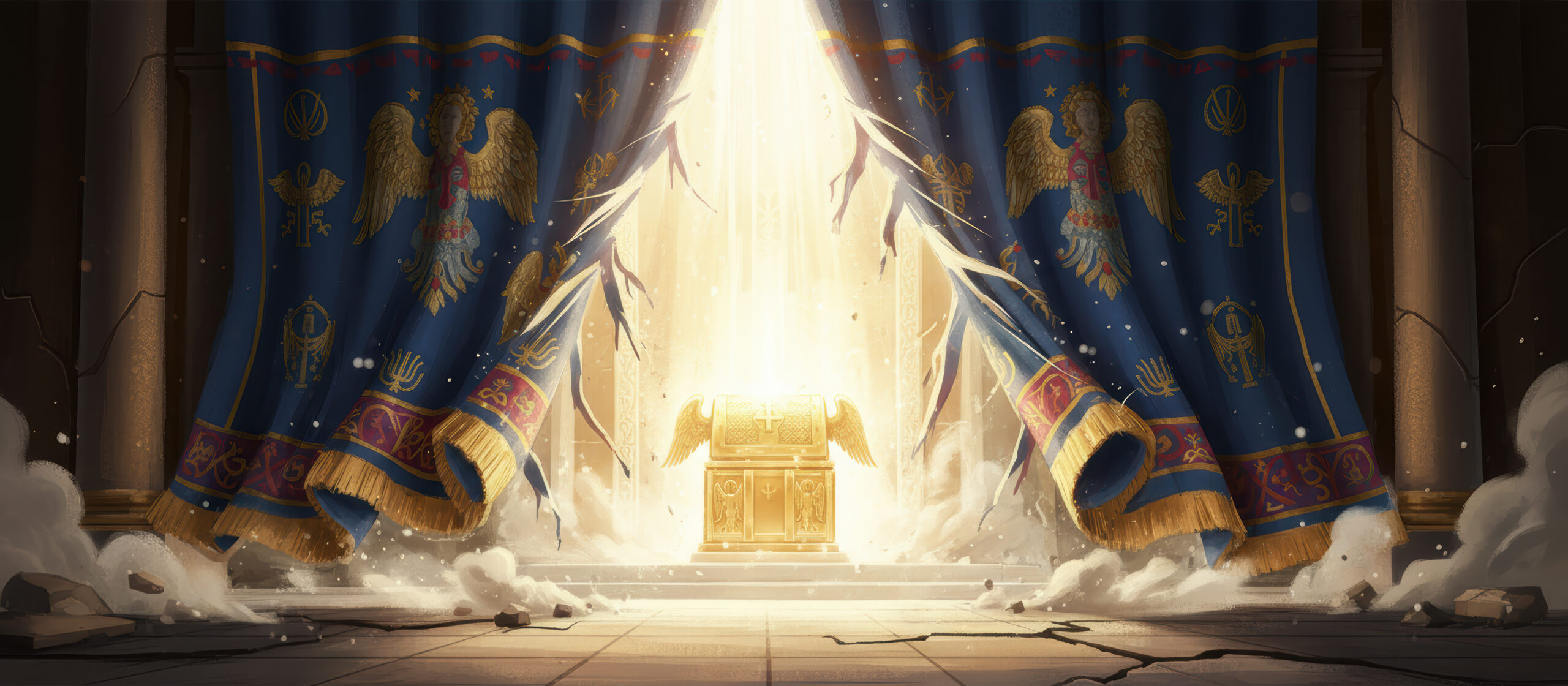
The great curtain sixty feet high, woven in blue and purple and scarlet was not merely a physical barrier. It was a spiritual statement: you are not yet ready. Sin separates. The holiness of God is not something the unclean can approach without being undone.
And yet the veil did not say never. It said not yet. It was a promise waiting for its fulfilment. The whole sacrificial system was a long education in a single, staggering truth: intimacy with God requires that the distance between us be closed not by our own striving, but by an act of grace from his side of the curtain.
“And the curtain of the temple was torn in two, from top to bottom.” Matthew 27:51
From top to bottom. Not from the bottom, where human hands might reach. From the top where only God could tear. In the moment of Christ’s death, the architecture of separation became the architecture of welcome. The Most Holy Place was thrown open, not to one trembling priest, but to all who would come through the new and living way.
What Worship Becomes
For those who understand what the veil’s tearing means, worship is transformed. It is no longer religious performance offered at a safe distance. It is an invitation into the very chamber where God dwells not the shadow, but the substance; not the type, but the fulfillment.
This is why true worship carries weight. When we gather, when we bow in prayer, when we lift our voices or fall into silence before him we are not performing a ceremony. We are stepping through a torn veil. We are entering a Presence that is at once terrifyingly holy and incomprehensibly tender.
The intimacy available now exceeds anything the high priest experienced on Yom Kippur. He entered once a year, with incense smoke to shield his eyes. We are invited to come with unveiled faces to behold and to be transformed, as Paul wrote, from one degree of glory to another (2 Corinthians 3:18).
Cultivating a Holy of Holies in the Soul
The writer of Hebrews urges us: “Let us draw near with a true heart in full assurance of faith” (10:22). The invitation is not timid. Full assurance. True heart. These words suggest that hesitancy in worship the reflex to keep God at arm’s length is actually a failure to grasp what has been accomplished.
To cultivate intimacy in worship is to practice dwelling in Presence. It is sitting with Scripture not merely to extract information but to encounter the Author. It is bringing prayer not as a list of demands but as a conversation with Someone who knows us completely and loves us still. It is learning the discipline of silence because intimacy rarely flourishes in noise, and the God who spoke in a still small voice still often meets us in the quiet.
There is a holy boldness the torn veil invites us into. Not the presumption of those who treat the sacred as common, but the confidence of children who know they are welcomed who rush into the Father’s presence not because they have earned it, but because the door has been opened and the invitation is real.
The Mercy Seat Still Awaits
Above the Ark, between the golden cherubim, was the mercy seat: the kapporeth in Hebrew, the place of covering and atonement. It was here the blood was sprinkled. It was here the glory rested. And it is this image that echoes through the New Testament when it describes Christ as our hilasterion our propitiation, our mercy seat (Romans 3:25).
He is both the sacrifice and the throne. He is the meeting place. And in him, intimacy and holiness are no longer in tension they are wed together in the mystery of grace. We can be close to a God who is utterly holy because the One who is holy has made us clean.
So let us come. Let us not linger in the outer courts of superficial religion when the inner chamber is open. Let us bring our whole selves our grief and our wonder, our questions and our praise and press through to the Presence.
The veil is torn. The mercy seat is sprinkled. And the God who dwelt in thick darkness now makes his home in human hearts.
Come boldly, beloved. The way is open.
The One who waits is Love itself.